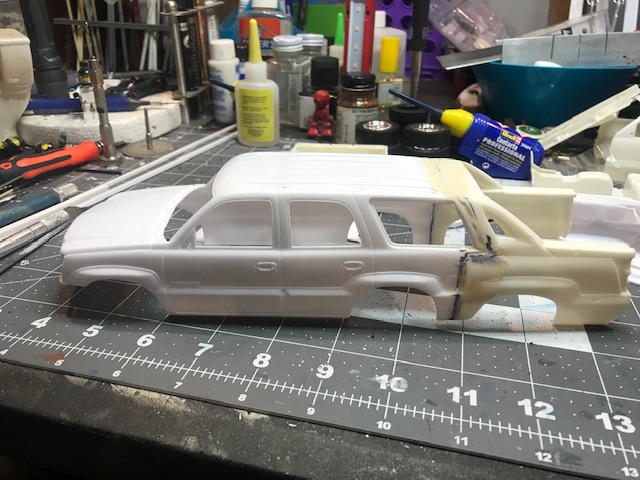
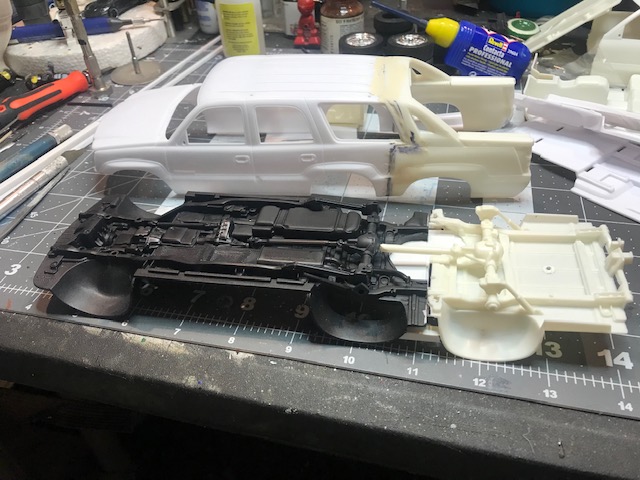
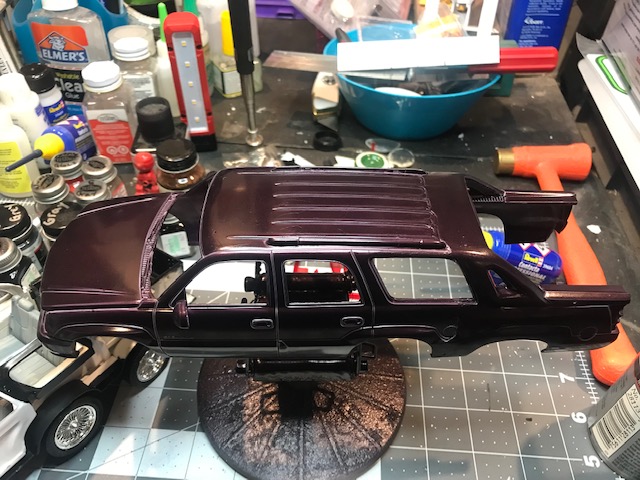
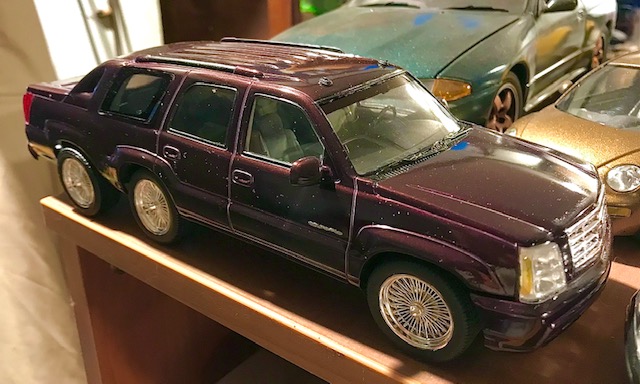
6×6 Completed

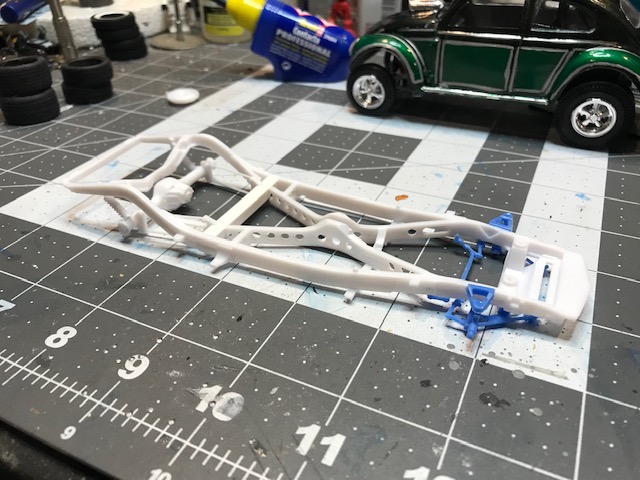
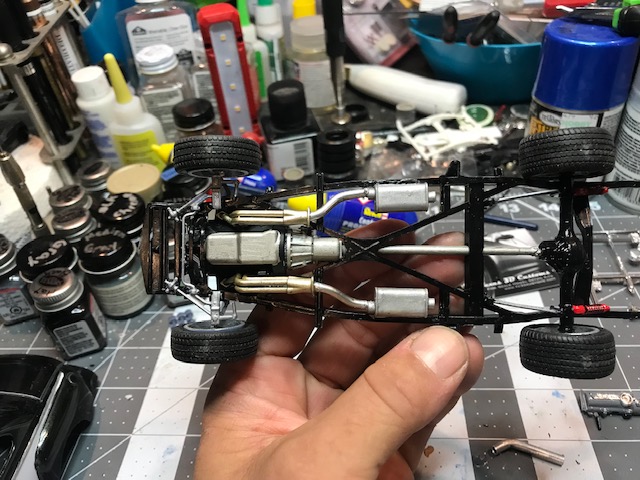
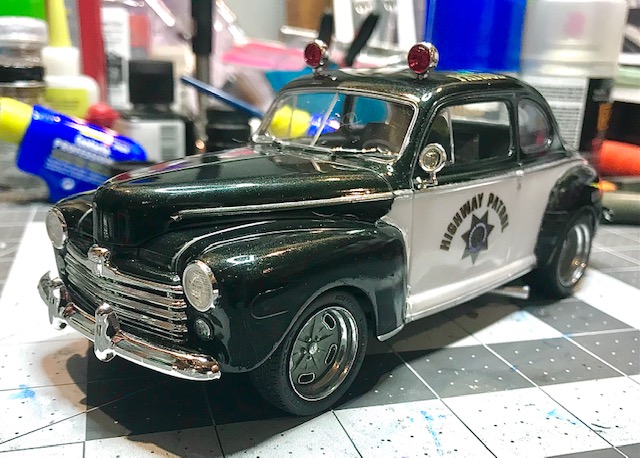
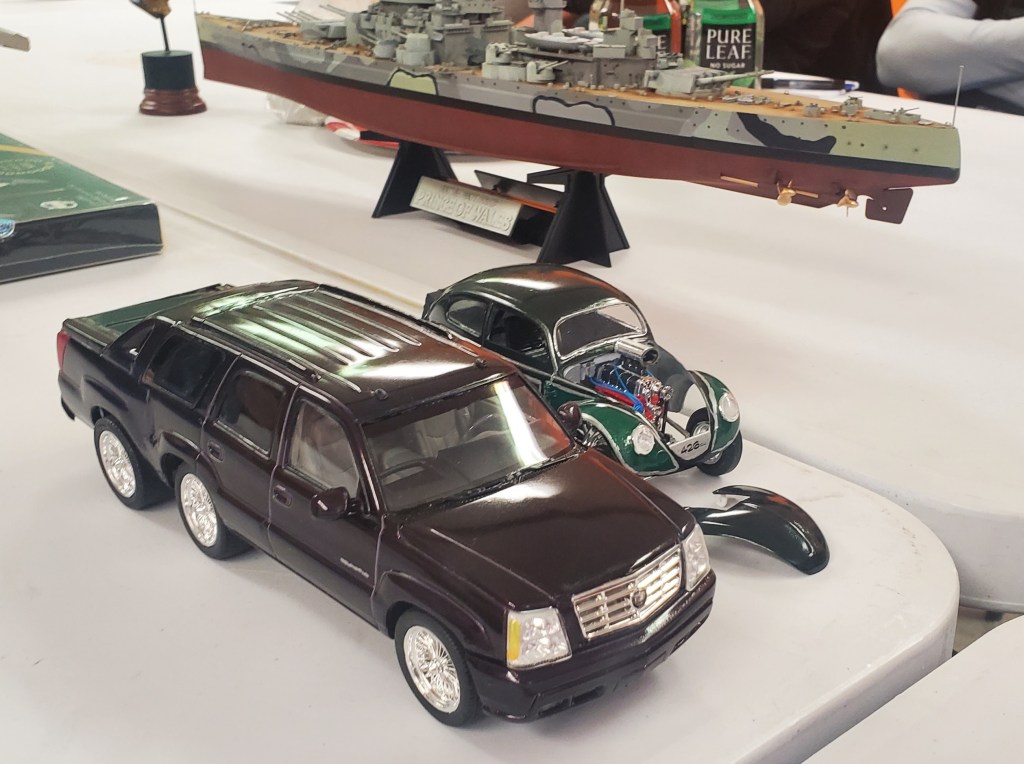
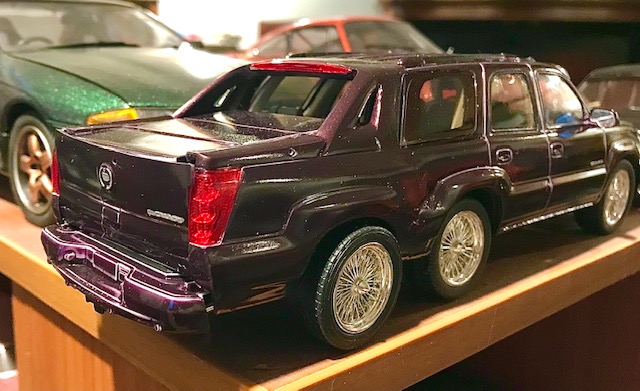
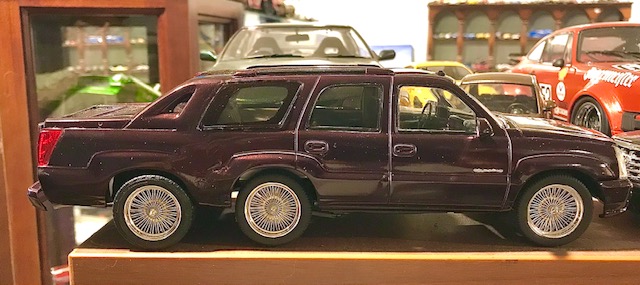
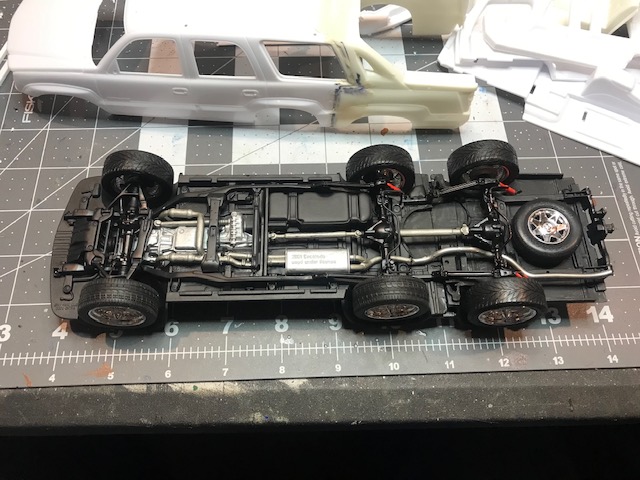
The details are: three kits one AMT Escalade EXT combined with two Revell Escalade kits. The EXT had its rear three quarter cut off just at the C pillar, this was then grafted to the shortened rear end of the first Escalade. The first join and putty work of this can be seen in the first round of photos.

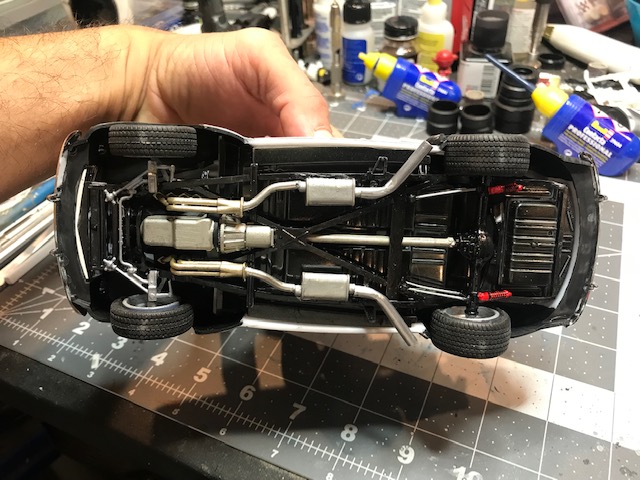
The chassis of the EXT was also sectioned and grafted to the chassis of Escalade #1 for the chassis seen in the first round of pictures. The interior of said Escalade needed to be shortened and reshaped to fit around the bed/box assembly of the EXT it was now joined to.

The tailgate is a combination of Silverado 1500 and Escalade rear hatch skin joined and puttied to shape, while the rear bumper is unmodified EXT.  Just another Frankenstein monster from my workbench.

-Ross

Chris’ Frontline Visit

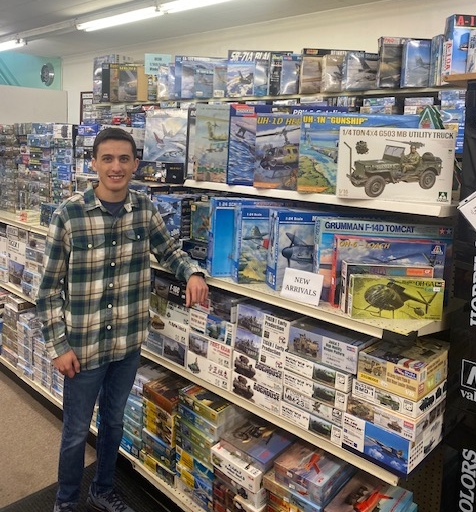
Good day gents.  I visited one of our sponsors on Friday-Frontline Hobby Store in Staunton. It was good seeing Christian and seeing how his shop is doing very well.  His shelves are full of good stuff-minus the two kits I got! 

Please stop in a visit Christian as he is one of strongest benefactors.  I am happy to carpool or caravan with anyone who wants to go!

-Chris

Saturday, October 14th

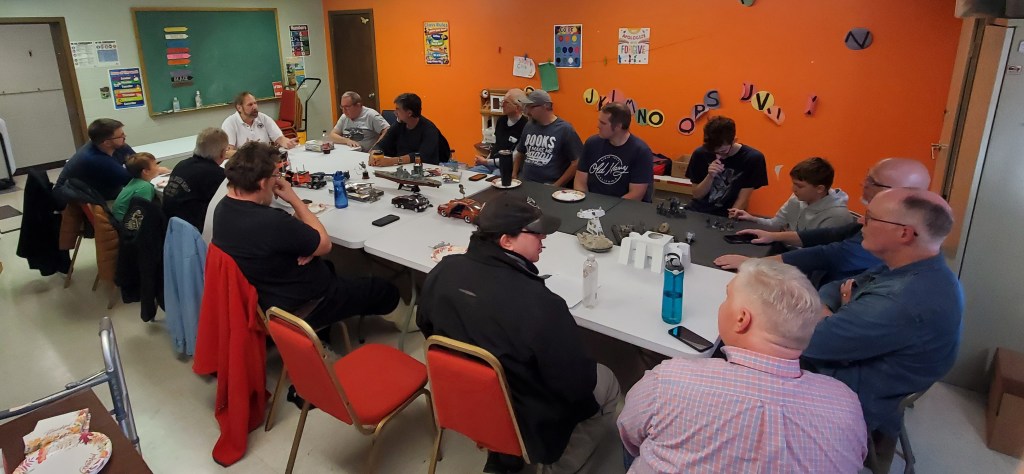
Good day gents.  The October meeting was very good in that there was a lot of shop talk; with the main conversation and many side bars going on.  It was great to see (or hear?) and shows we are melding together.  We are now over 20 members and we grew by an amazing 5 brand new members from this meeting.  Say hello to the new members Randy and Martin, Ed, Andre, and Daniel.  Welcome aboard, sprue bros.

Speaking of Martin, he raised a neat opportunity for the club to teach the kids at Randolph Macon Academy in Front Royal.  Martin’s task is to chat with the administrators at the school to work out a schedule, number of kids, and so forth.  To start off with, he, Randy, and myself can be mentors but it would be great to have as many club members participate and lend your expertise and time to the kids.  This will be a great opportunity to create new modelers for the future and the health of our hobby.

As I mentioned, we are not ready or in a position to host a show in 2024.  If we do, in fact, want to host a show, it needs to be deferred to 2025 or later.  The head of the chapter that hosted Paxcon made that point his first one when I talked with him about what it takes to host an event. 

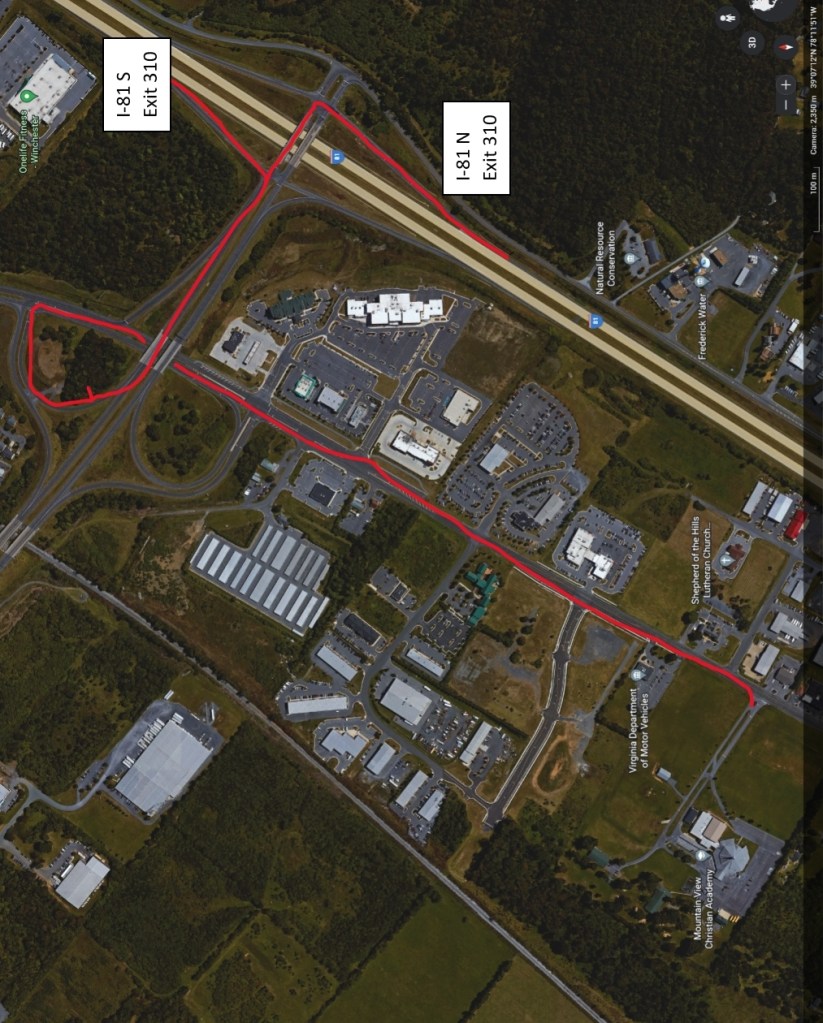
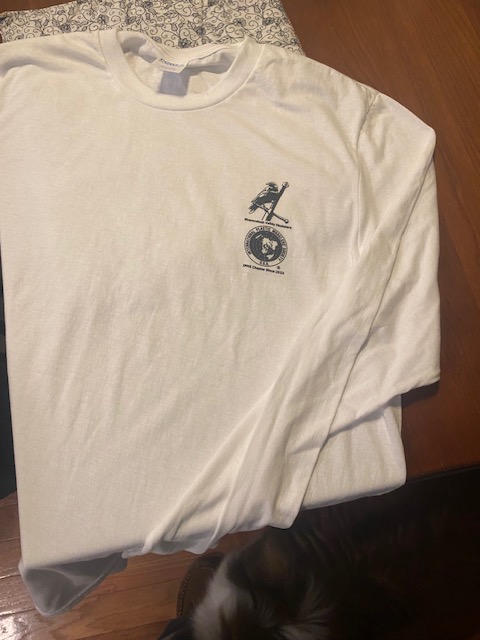
Tom earned bonus points for us by securing a new venue for us to use – hopefully for a long time.  It is at his church – the Church of Christ at Mountain View.  The address is 153 Narrow Lane and is in the lot next to the Virginia DMV that is on US Hwy 11.  We will meet there for the 11 November meeting at 11.00 am.  I will try and get our page on IPMS/USA’s site updated with our new meeting venue but IPMS/USA’s web page is not easy to use so wish me luck on that score.  As well, now that we have funds from our kit sales at Penncon, I will be doing the submission to IRS to get our 501 status secured.  I also had membership cards but I forgot them for the October meeting.  I was too focused on getting donuts!
For November, let’s hold a chapter raffle to raise additional funds for the club.  Please contact me to donate your kit(s) before the meeting.  New member Ed started off by donating 5 kits at his first meeting with us so you can’t be upstated by the new guy! 
Good building all; Chris

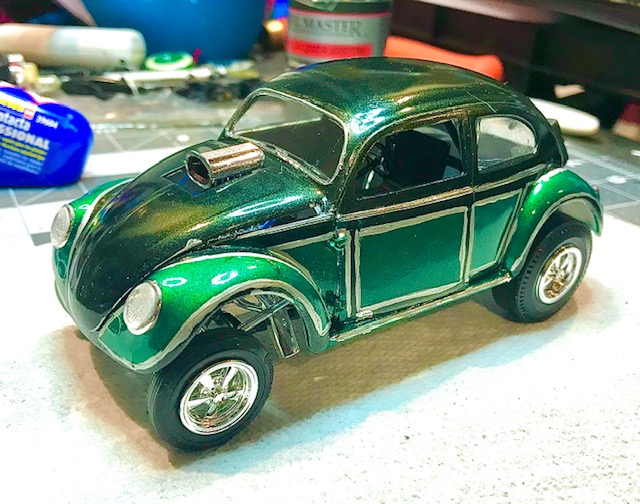
Techniques for Achieving Smooth Paint on Model Cars

Considered by many to be the hardest thing to achieve and the first things that catches the eye of a model car build is the quality of the paint job of the body. Nothing will knock your entry out of the running in a contest or will get your build overlooked faster than a rough looking paint job. Even the “Rat Rod” build craze of the late 1990’s into the 2000 saw smooth and flawless finishes of the Flat/Matt Black and Flat/Matt Red paint jobs.

To achieve that finish, you must have a smooth surface to paint. Hopefully this little “primer” will help you reach that goal.

There are two schools of thought when it comes to smooth paint finishes on model car bodies: “Primer” and “No Primer”

The advantages of using a base primer coat is it allows for the use of most lacquer and synthetic lacquers to be used on your model car body without crazing the plastic. Classic Monogram (50-90s) and the AMT kits of the 90’s (Pre- Round 2 days) are very susceptible to this due to the chemical make-up of the plastic. Monogram kits also had what became known as a “Bleed thru” problem, where the dye from the plastic would bleed into the paint creating all sorts of havoc to your finish. By the mid 2000’s, this was eliminated. Another down side was the loss of detail due to the build up of the primer. AMT and MPC kit car bodies had most of the badges and chrome “to scale” and often would disappear under the primer.

Primers also leave a rough finish, even the smoothest of primers do, with only Badger Stynylrez being the exception. Then requires the extra steps of polishing the primer to achieve your smooth finish. “No Primer” allows the builder to achieve a smooth finish and retain the surface detail of the car body. The downside was the dreaded “Bleed thru” of the underlying color (if molded in color) or the paint crazing the body. If there is a static charge on the body, the dreaded “Fish-eye” effect will also show up and will require removal and re-application of the paint. Candy and most metallic finishes are very difficult to achieve over bare plastic due to the transparent nature of the paint.

Here are a few tips that I use that give me smooth finishes time and again on my builds separated by the two schools of thought.

First, Primer. I only use these two brands of primer for model cars: Tamiya or Mr Surfacer by GSI/Ceros a.k.a “Gunze Sango”. I use these as they are developed for use on plastic, metal, and resin surfaces. They provide a “bite” into the surface, but not so much as to damage it. Other types of primer, for example Valeijo and Badger’s Primers, actually “shrink” themselves to the surface. Any contamination will cause this to bubble or lift when the paint is applied to it.

Primers for automotive use, like Duplicolor, usually are very thick, requiring a lot of sanding, and have been known to craze plastic of the Japanese kits (Tamiya, Fujumi, and Hasegawa).The advantages of these two brands is they come in various grades: Mr Surfacer 500, 1000, & 1500; Tamiya Regular and Fine; Colors: Mr Surfacer Black, Grey, Mahogany; Tamiya: White, Gray, Pink, Oxide Red, Lt.Gray. Both are available in Spray cans and Bottles. These options allow the builder to airbrush the primer and do touch-up in case you sand thru the primer.

After the primer is applied and dries for 3-4 hours (preferably overnight, but not all have that kind of patience or time), I sand the entire surface with 1000 grit (600 if using MR Surfacer 500 or Tamiya Regular Gray). Then work my way down to 2000 or 3000 grit when the primer takes on a polished sheen. You will quickly find any nicks, high or low spots, missed mold lines, and other flaws before painting the color coats. Once satisfied, proceed with your color coats.

“No Primer”. Surface prep of the plastic becomes very important for not using primer. Start by sanding the body with 1000 grit. Everything but the chrome trim pieces and any badges. Like with the primer coat, this will show where the high and low spots exist from the molding process, missed mold lines or surface imperfections, and identify any surface flaws that may require attention before applying paint. Once you are satisfied with your finish, proceed to polish the plastic, working your way to 3000 grit, and many go to 6000 for those candy/metallic finishes.

Either one of these techniques will give you the foundation for a beautiful finish. It will reduce the chance of fish-eyes, orange peel (not eliminate as that can come from paint mixture and humidity during painting); and flaws that could ruin the final finish.

Adding to color layers, either by spray can or airbrush, should be done is layers. The coat should be allowed to “flash”, surface dry, before proceeding. For most lacquers this can be as quick as 1-2 minutes, enamels, 15-20 min. Build the color up slowly and gradually. Always spray under a bright light so you can find those areas that didn’t get the proper coverage. Please, always use a spray mask. This will build up in your lungs if you do not take precautions. With your surface preparation, you will see rather quickly the smooth finish that is your goal. Always check your work. If you find fuzz, bugs, or anything else that fouled your paint, let it dry. Then use 1000 grit to remove and re-paint. Better to get it now, than later.

I do hope some of you find this helpful.  This is a quick and dirty guide. Every job is unique and every paint job is different. This is the basics. If you have specific painting scenerio(s) you have a question or need tips on, ask!

– Mark

PAXCON 2023

Good day Gents, here is my report from PAXCON.  Big kudos to the club there – for their first show I must say it was one of the best shows I have ever been to.  The venue was spacious, the tables were laid out well and the members whom I met were very friendly and sincere.  The vendor areas were well situated and food was offered for purchase at the site.  I must also say the level of kit construction in today’s world is just amazing – several of the models were just simply superb.  Mark was there as a vendor and it was good to see and chat with him there.  He had met a fellow who was thinking about joining us but I missed talking with him; hopefully he will come to the next meeting and join our chapter!  And speaking of meeting fellows, I met Dana Bell – the noted author of many reference books – he was very nice and easy to talk to and he signed two of the reference books I bought from him.  FYI, the event was good for me too; I took 1 silver, 4 bronze, and 3 golds – not a bad outing.

-Chris

Photoetch vs 3D Prints

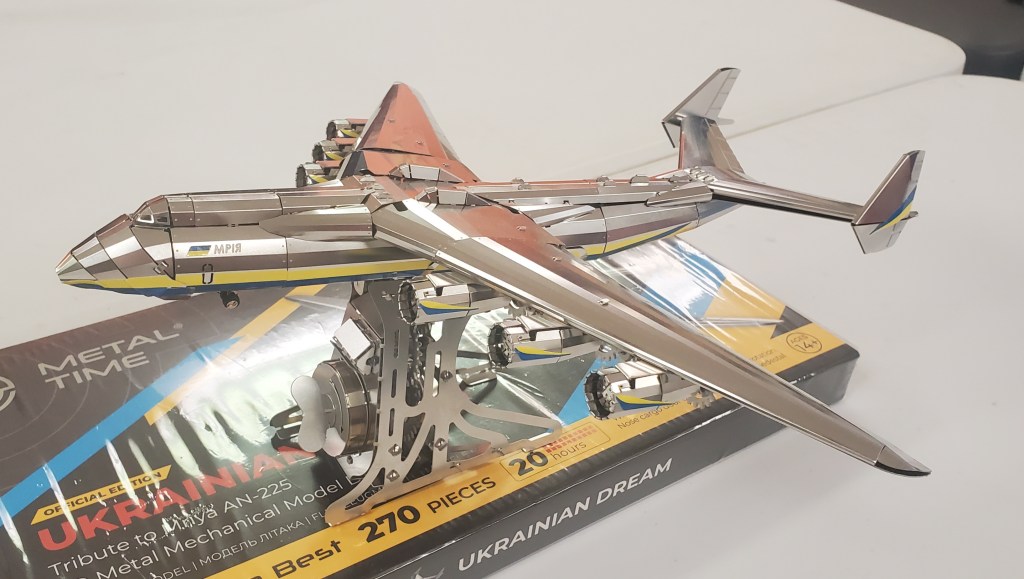
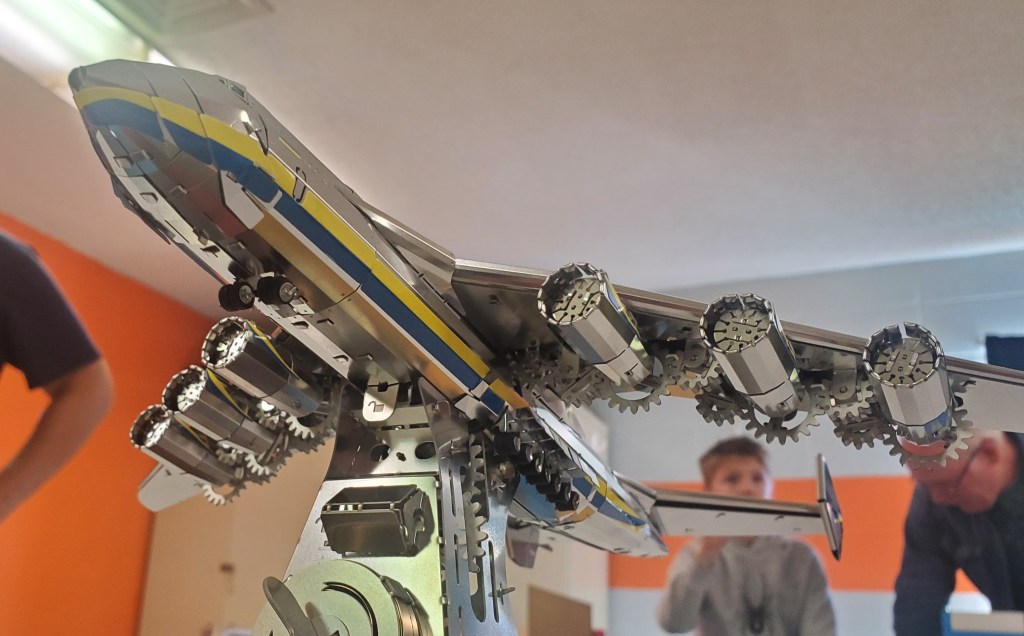
As most of you know, Tom has been working on a cargo plane for ants, the An-225 in 1/144 scale. He asked me to duplicate some of the photoetch parts to make some assembly easier and to make the ladder less fragile.

It’s taken a few attempts to get things right and they’re still not perfect but I wanted to post an update because I know a few of you have shown interest in 3D printing and what can be achieved. Below are some photos showing Tom’s PE parts compared to my printed parts.

The PE parts are about 0.14mm thick if I remember correctly. In order to get these to print correctly I had to go a little thicker to between 0.2mm-0.25mm. I think it will be a few more years before printing can be as thin as PE, but there are some obvious advantages to a printed part already. The printed parts don’t bend and they don’t need to be assembled or bent or any of that. Trimming the supports is a bit of a pain, but I can also print lots of extras so it matters much less if you damage something.

I’ll have these parts with me at the next meeting so in anyone wants to check them out let me know. Have a great weekend, everyone!

– Chad

NCMSS Results

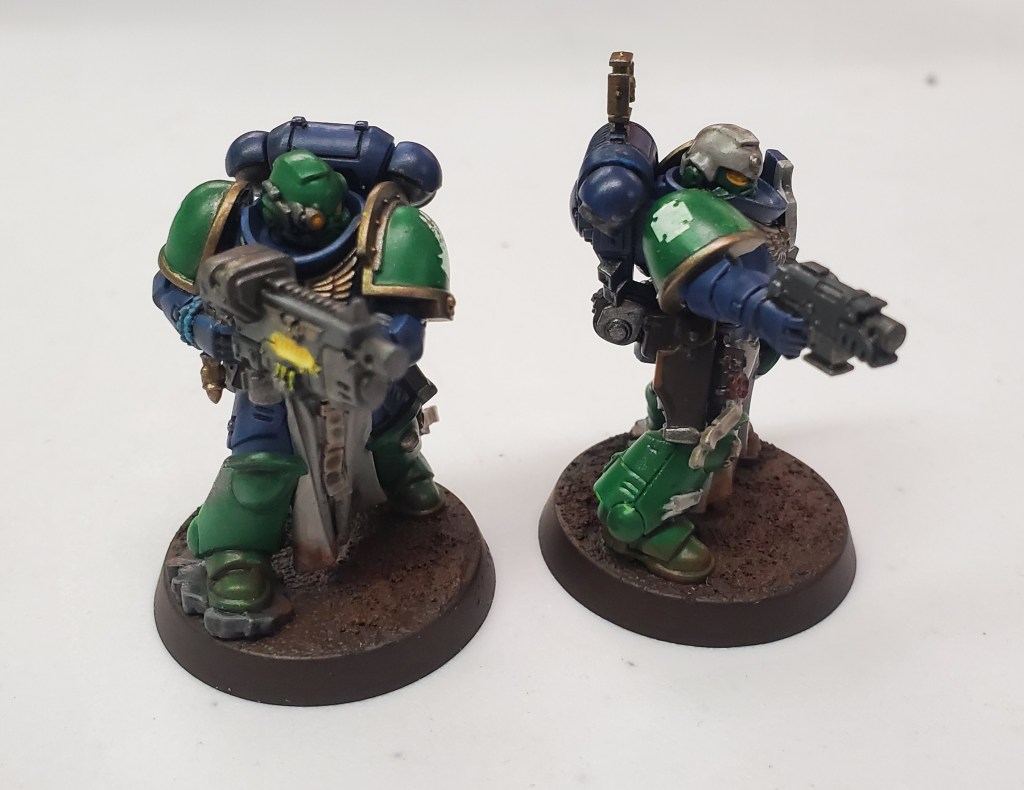
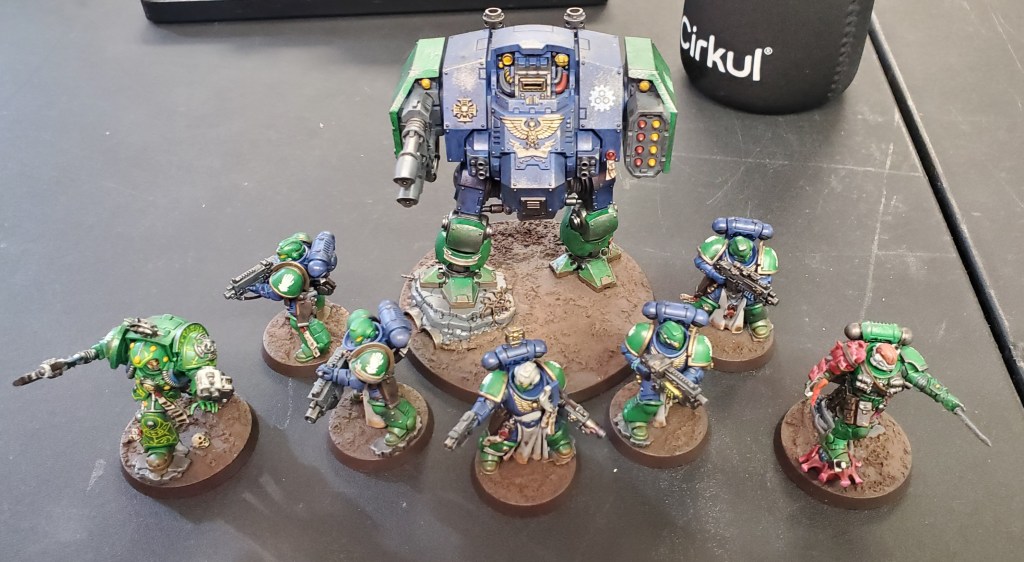
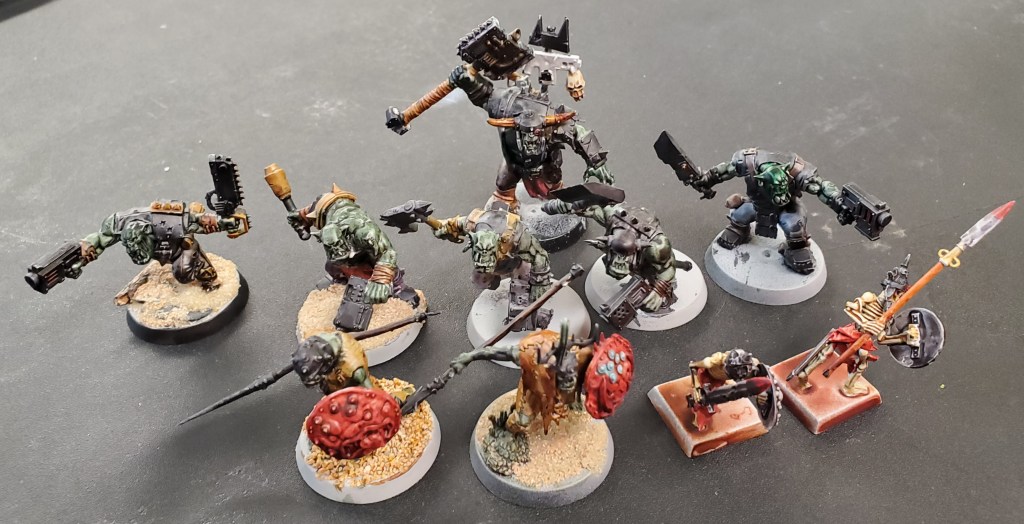
Hi gents. I attended the National Capitol Model Soldiers Society show on 30 September. Tentative new chapter member Randy was also there so our chapter had good representation.  I took 3 silvers and Randy took, I think, 3 silvers as well.  We hope together we talked a fellow into joining our chapter too – if not Randy’s application fee goes up $10! (Just kidding).  Next up is Paxcon where I will meet up with Mark and another prospective member who responded to the email campaign I had big IPMS do for us 2 weeks ago. 

– Chris